ADVERTISEMENT
* Iron is concentrated in the yolk
* The reaction happens at the boundary
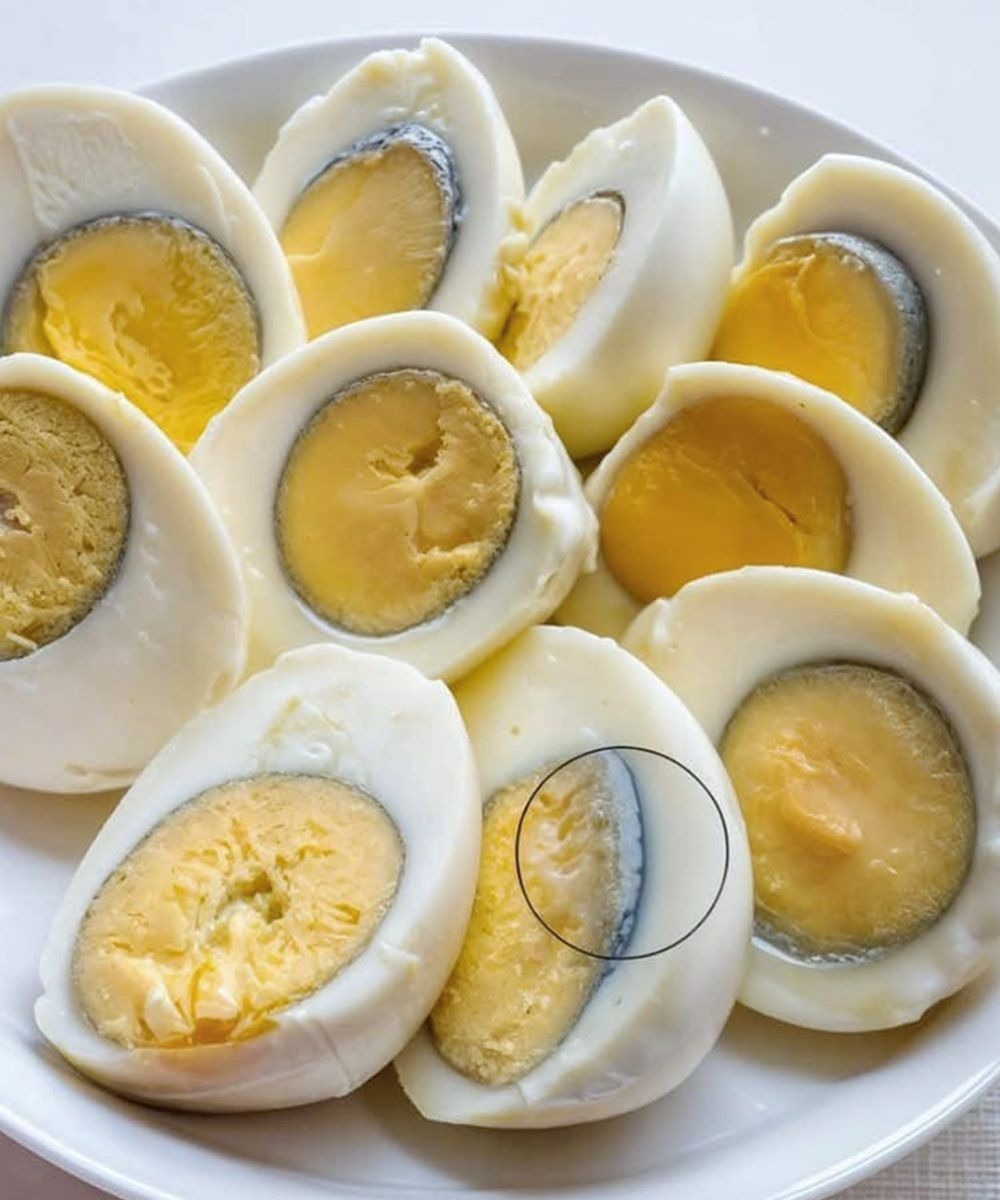
Heat drives sulfur inward until it meets iron, forming a visible halo exactly where the two meet.
It’s not random—it’s spatial chemistry.
—
## A Sign of Overcooking, Not Inexperience
Many people feel embarrassed when their eggs develop the green ring, as if it signals poor cooking skills.
In reality, it often just means the eggs stayed hot too long.
This happens easily when:
* Cooking large batches
* Boiling eggs for meal prep
* Forgetting eggs on the stove
* Skipping the ice bath
Even experienced cooks encounter it occasionally.
—
## Texture Tells the Same Story
The green ring rarely appears alone.
It’s often accompanied by:
* A crumbly or dry yolk
* A slightly rubbery white
* A faint sulfur smell
These are all classic signs of overcooking.
The egg has crossed the line from “fully cooked” into “overdone.”
—
## How to Prevent the Green Ring
If you want bright yellow yolks with no discoloration, prevention is simple.
### 1. Don’t Overcook
For large eggs:
* 9–10 minutes for firm but creamy yolks
* 11 minutes max for fully firm yolks
### 2. Start Timing Correctly
Time should begin **once the eggs are in hot water**, not from a cold start unless you adjust carefully.
### 3. Use an Ice Bath
Immediately cooling eggs stops the chemical reaction.
An ice bath:
* Halts cooking
* Prevents sulfur migration
* Preserves color and texture
### 4. Avoid High Rolling Boils
A gentle boil or simmer is sufficient.
Violent boiling increases heat stress and sulfur release.
