ADVERTISEMENT
Why Shoes Are Found—but Not Bodies
One of the most haunting images from Titanic expeditions is pairs of shoes resting on the seabed.
Why shoes, but no bodies?
The answer lies in materials and decay rates.
Shoes as Silent Markers
Leather shoes are more resistant to decomposition
Shoes often remain together because feet were close
The body decomposes, but the shoes stay in place
In many deep-sea wrecks and disaster sites, shoes are often the last personal items marking where a person once lay.
They are not evidence of missing bodies—they are evidence of where bodies once were.
What About Clothing and Jewelry?
Clothing fibers, especially natural ones like wool or cotton, can persist longer than flesh but eventually decay.
Metal objects such as:
Jewelry
Belt buckles
Watches
Buttons
often survive, which is why such items have been recovered.
These artifacts are not morbid curiosities; they are archaeological evidence of human presence long gone.
Why Bodies Were Not Preserved Like in Other Shipwrecks
Some people point to other shipwrecks where bodies or skeletons were found and ask: why not Titanic?
The key differences are:
Depth
Water chemistry
Time
Shallower wrecks:
Have more stable calcium carbonate levels
Allow bones to remain intact
Sometimes preserve remains for centuries
Titanic’s extreme depth makes preservation virtually impossible over long periods.
Time: The Most Powerful Force of All
Even in ideal conditions, time erodes everything.
Titanic sank in 1912. The wreck was discovered in 1985. That’s 73 years of exposure before the first human eyes saw it again—and now more than a century has passed.
Over that time:
Organic material decayed
Metal corroded
Structures collapsed
Bones dissolved
Time, combined with deep-sea conditions, leaves little behind.
Were Bodies Ever Seen in Early Explorations?
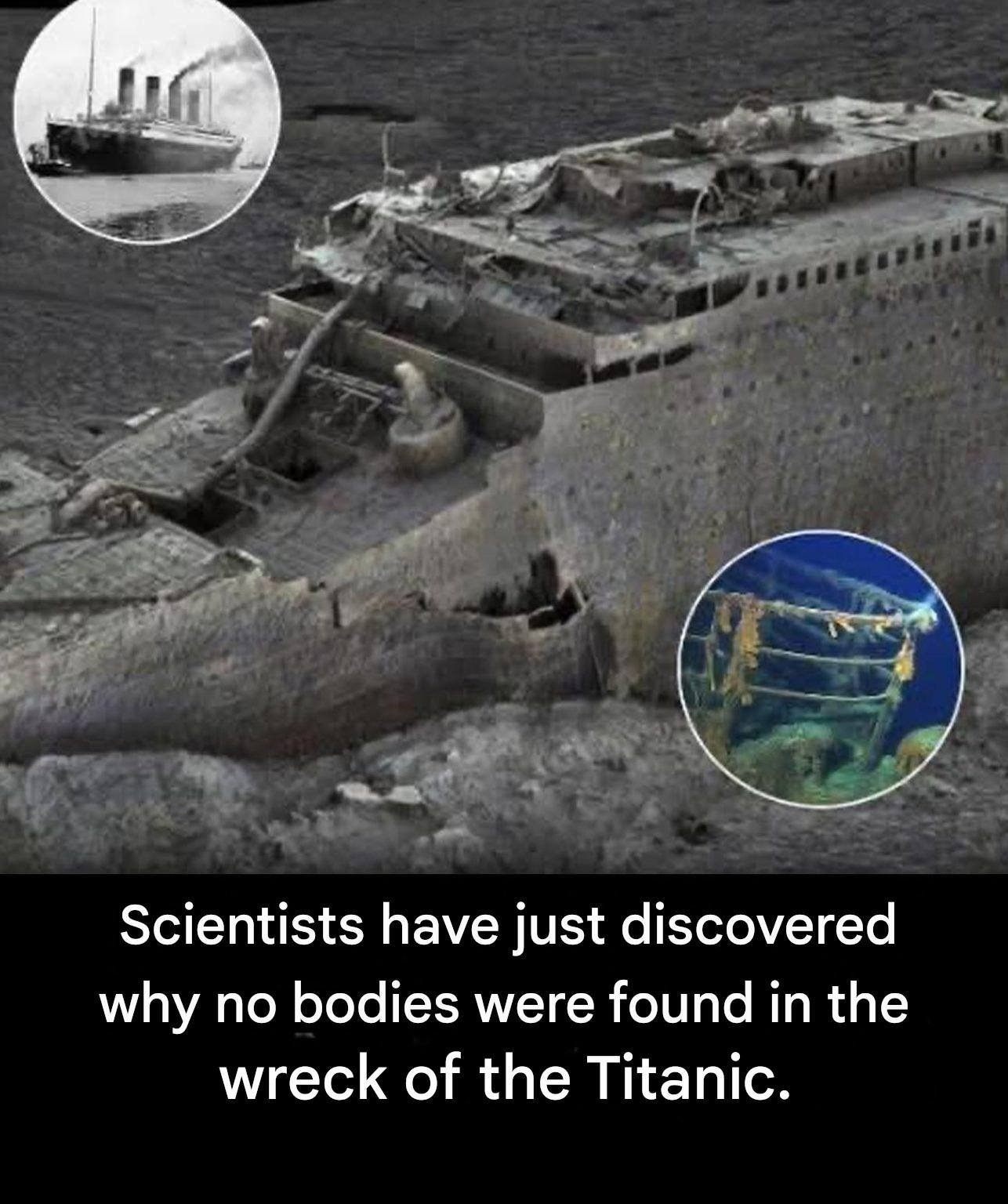
When the wreck was first explored using submersibles and remote-operated vehicles, explorers did not report seeing bodies.
However, they did report:
Clothing remnants
Shoes
Personal items
Areas that strongly suggested human remains had once been present
Out of respect, explorers have generally avoided disturbing these areas.
Ethical Considerations: A Maritime Grave
The Titanic is widely regarded as a mass grave.
International agreements and ethical guidelines discourage:
Disturbing human remains
Recovering personal artifacts without purpose
Treating the site as a curiosity rather than a memorial
The absence of bodies has not diminished the sense of reverence. If anything, it reinforces the solemn nature of the site.
Common Myths and Misconceptions
Myth 1: Bodies Are Hidden Inside Sealed Rooms
Reality: The ship is heavily collapsed and open. There are no sealed, preserved spaces.
Myth 2: Bodies Were Removed Before Discovery
Reality: The depth makes recovery impossible without advanced technology, which did not exist until decades later.
Myth 3: The Absence Is Mysterious or Suspicious
Reality: Science fully explains the absence of remains.
What the Titanic Teaches Us About Death at Sea
The story of the Titanic isn’t just about a ship—it’s about human vulnerability.
The ocean:
Erases physical traces
Preserves stories
Demands respect
The lack of bodies is not a mystery of disappearance, but a reminder that nature follows its own rules, indifferent to human tragedy.
Why the Question Still Matters
People ask why no bodies were found because:
We seek closure
We struggle with absence
We want tangible evidence of history
The truth is uncomfortable but profound: nothing human lasts forever, especially in the deep sea.
Final Thoughts: Presence Beyond Remains
No bodies remain in the wreck of the Titanic—but the people are still there in another way.
They remain in:
The artifacts left behind
The stories passed down
The lessons learned about hubris, safety, and compassion
The collective memory of humanity
The ocean may have reclaimed their physical forms, but it has not erased their legacy.
