ADVERTISEMENT
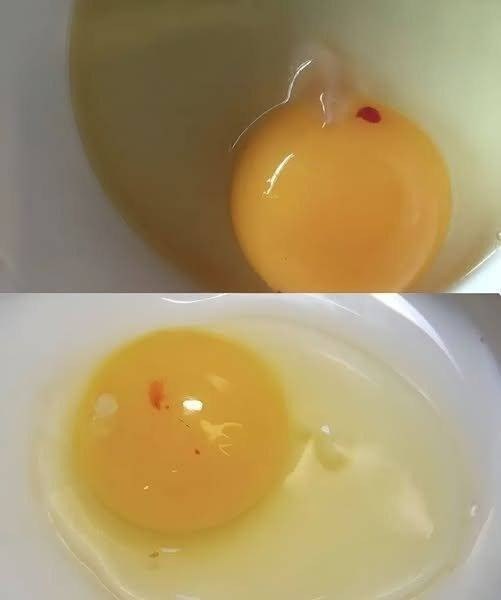
In recipes where eggs are beaten (e.g., omelets, baking), the spots often blend in and become virtually invisible.
### ✔️ Cook Thoroughly
If you’re worried about food safety in general:Groceries
* Ensure eggs reach **an internal temperature of 160°F (71°C)** in cooked dishes.
* Cook until yolks and whites are firm in fried or scrambled eggs.
This helps protect against bacterial contamination — unrelated to the red spots but important for safety.
—
## 🐓 Why You Might See More Red Spots in Some Eggs
Different farming practices and hen breeds can influence how often red spots appear:
### 🌾 Free-Range or Organic Eggs
Free-range or organic typically refers to how hens are raised, not egg quality indicators like blood spots. Some farms may even have more visible spots simply due to how they feed and manage flocks.
### 🍽️ Large Commercial Egg Producers
Many large producers screen eggs with optical detectors that reject those with visible blood spots — meaning supermarket eggs might have fewer visible spots compared to farm-fresh ones.
### 🐣 Younger Flocks
Flocks that have recently started laying tend to deliver more eggs with spots. As hens mature, the frequency usually decreases.
—
## 🧪 Debunking Common Misconceptions
Let’s address some myths that often circulate around red spots:
### ❌ “Red Spots Mean the Egg Is Fertilized”
Not necessarily. Fertilized eggs are a different concept — they may show a bull’s-eye pattern (embryo development) if incubated — but red spots can appear in both fertilized and unfertilized eggs.
### ❌ “The Egg Is Spoiled or Unsafe”
Not true. As long as there are no other signs of spoilage and the egg smells normal, it’s safe to cook and eat.
### ❌ “Blood Spots Make the Egg Harmful”
False. They’re simply natural anomalies from the chicken’s anatomy and don’t indicate bacteria or toxins.
—
## 🫖 Fun Facts About Eggs and Their Oddities
Eggs can surprise us in other ways too:
* **Double yolks:** Usually from young hens whose systems release two yolks at once.
* **Shell color:** Depends on breed — brown shells don’t mean more nutrients.
* **Bloom or cuticle:** A natural coating on eggshells that helps protect against bacteria.
Eggs are more complex than many people think!
—
## 🥘 Recipes Where Red Spots Don’t Matter
Here are a few dishes where red spots are barely noticeable:
* **Scrambled eggs or omelets:** Mixed in — no visibility.
* **Baked goods:** Cakes, cookies, breads — eggs are blended and baked.
* **Frittatas, quiches:** Mixed with other ingredients, spots vanish.
* **Egg fried rice or casseroles:** Texture and flavor mask imperfections.
In these cases, the flavor and nutrition are unaffected.
