ADVERTISEMENT
It does not indicate spoilage.
It does not mean the egg is unsafe.
It does not reduce nutritional value in any meaningful way.
The egg may be slightly overcooked, and the texture of the yolk may be drier or chalkier—but it’s still perfectly edible.
The concern is aesthetic and textural, not health-related.
—
## Why Some Eggs Get the Ring and Others Don’t
You may have noticed that not all hard-boiled eggs develop the green ring—even when cooked similarly.
That’s because several factors influence the reaction.
### 1. Cooking Time
The longer the egg cooks, the more sulfur is released.
### 2. Cooking Temperature
High, aggressive boiling accelerates the reaction.
### 3. Cooling Speed
Eggs left in hot water after cooking continue reacting internally.
### 4. Egg Age
Older eggs tend to develop the ring more easily due to changes in pH.
### 5. Mineral Content
Slight variations in iron content can affect intensity.
Even small differences can change the outcome.
—
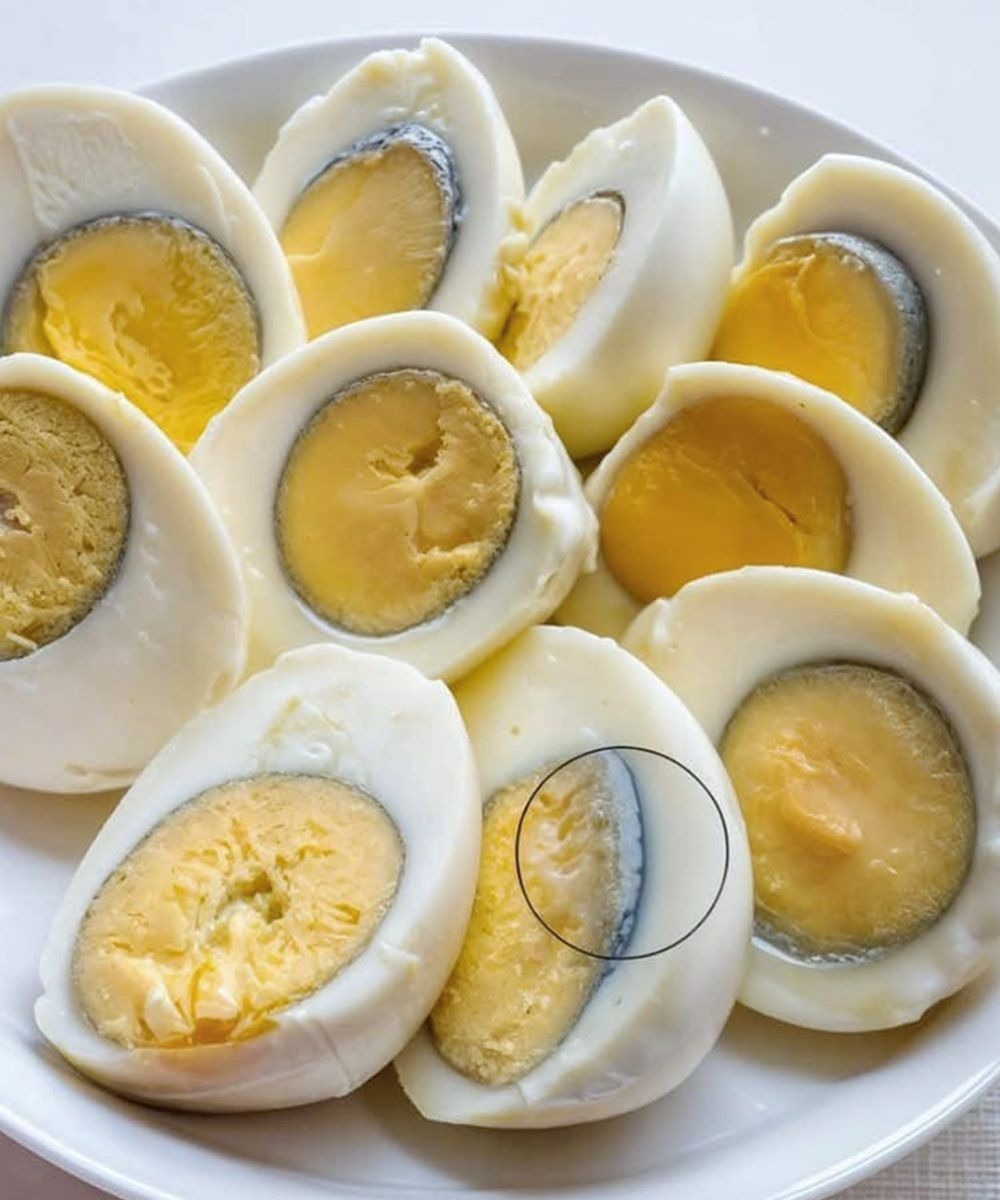
## Why the Ring Forms on the Outside of the Yolk
Notice where the ring appears.
It’s not in the center of the yolk—it’s on the **outer edge**, where the yolk meets the white.
That’s because:
* Sulfur originates in the white
